◆ A 15‑MINUTE RESIDENTIAL DISTRICT ◆
PROJECT
19859D
A next‑generation neighborhood where housing, work, daily services, leisure, and mobility are integrated into one coherent urban system. Certified low-carbon, climate-resilient, and designed for long-term livability.
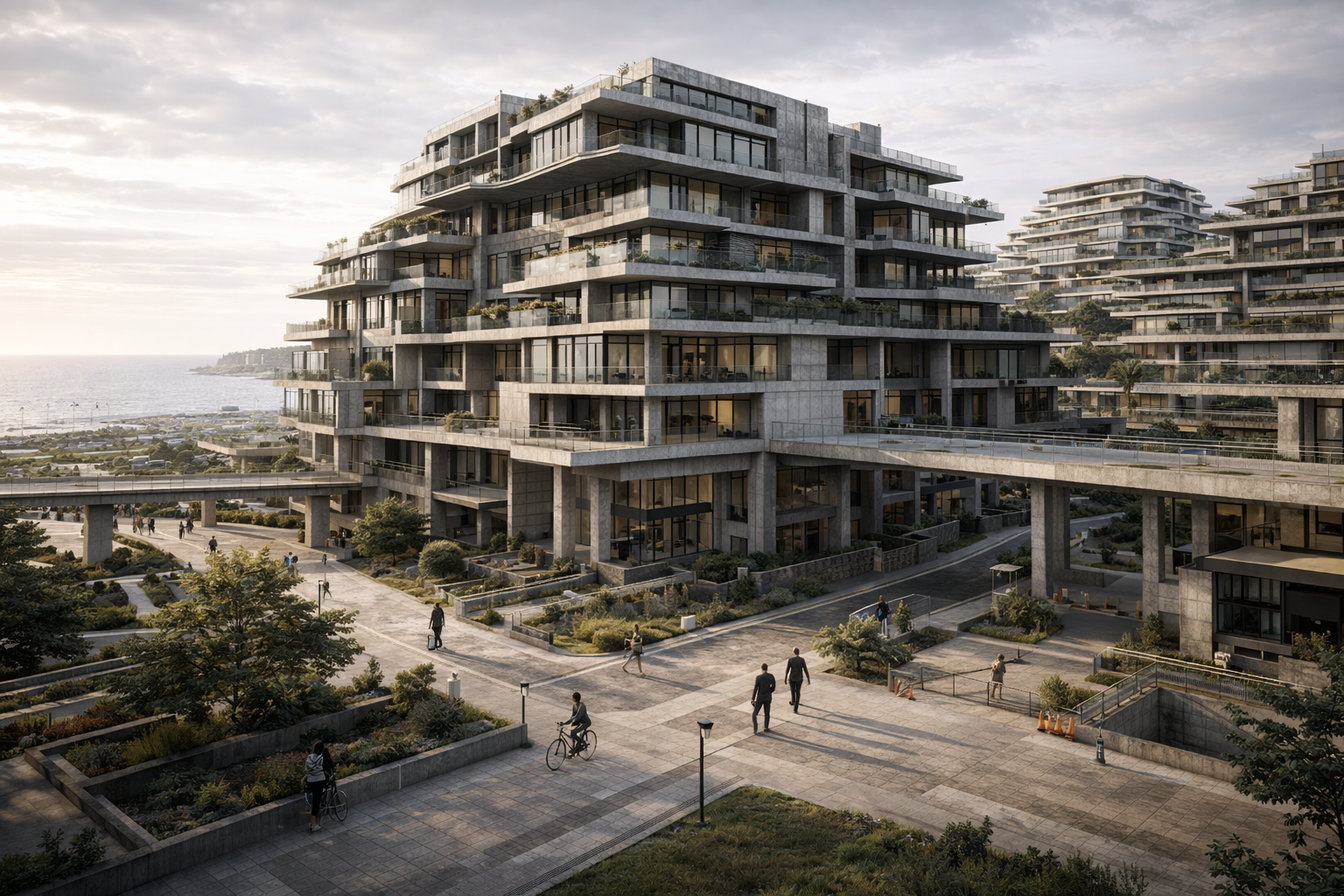
Masterplan perspective — district organization
Within a short walk or ride, residents can reach workspaces, childcare, cafés, groceries, fitness, healthcare, and public space. The district is organized to reduce wasted time, shorten distances, and improve the quality of ordinary days. This is not density for density’s sake. It is a calmer, more useful form of urban life.
APARTMENTS
Spacious & generous
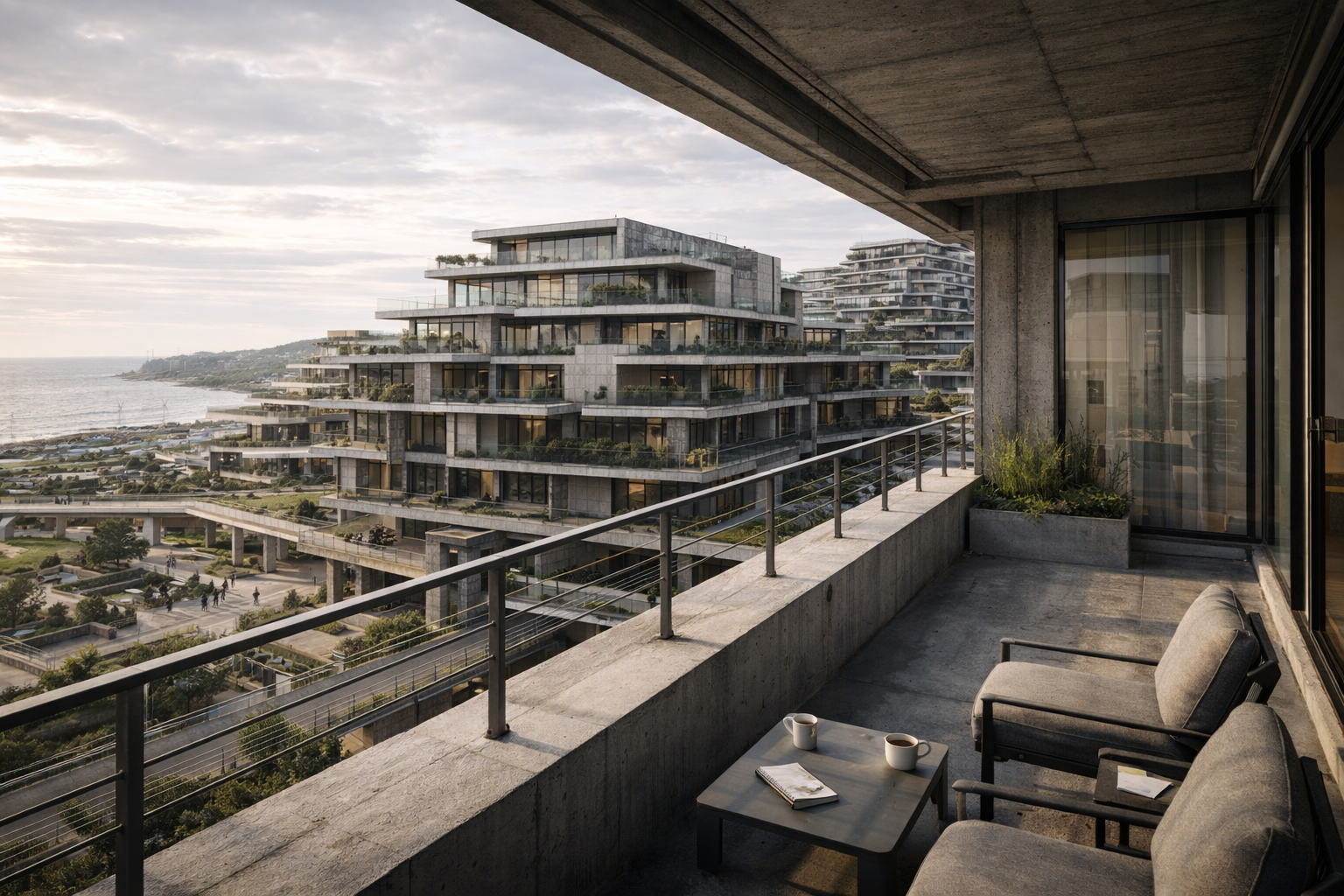
Generous balconies and terraces extend living space outdoors. Warm industrial interiors with visible material honesty. Units from 45m² to 140m².
SERVICES
Integrated daily life
Local retail, healthcare, childcare, fitness, and workspaces integrated into the ground plane. Walkable public spaces designed for calm movement.
MOBILITY
Walking first
Low‑emission mobility designed around walking first. Everything essential is within 15 minutes. Shared autonomous pods and underground freight.
COMMUNITY
Privacy & access
A neighborhood structure that supports both privacy and access. Long‑term livability over spectacle. Universal City Endowment for all residents.
Upper‑level residential view — terrace and urban landscape
STRUCTURE
Mid‑rise clarity
Maximum height of seven floors. Clear structural logic, deep floor plates, strong horizontal lines. Prefabricated hexaframe system.
MATERIALS
Honest & warm
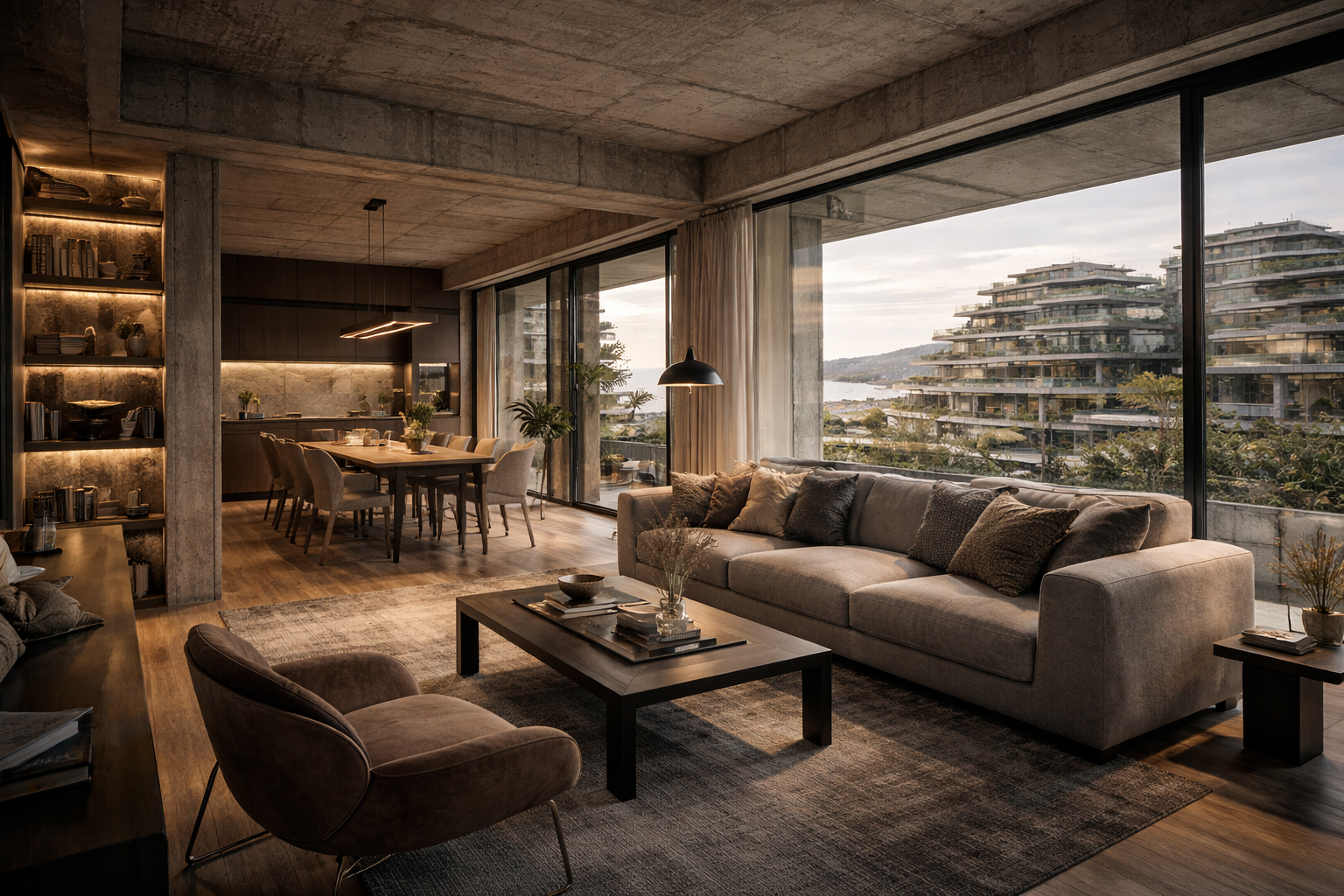
Exposed low-carbon concrete, BFRP columns, large‑format glazing, and warm interior finishes. Industrial in clarity, warm in atmosphere.
PASSIVE DESIGN
Cooling · Ventilation
Wind catchers generate 4–8 Pa pressure differentials. Thermal chimneys. 32° orientation minimizes solar gain. PCM panels absorb peak loads.
MIXED‑USE
Integrated program
Residential buildings (65%), everyday commerce (20%), R&D and work environments (10%), civic amenities (5%).
ADAPTABLE
Multiple cities · Climates
Modular design allows adaptation to arid, temperate, and tropical climates. Scalable from 5,000 to 50,000 residents.
Interior living space — warm materiality and generous light
19859D responds with a clear proposition: build less sprawl, less isolation, and less dependency on long commutes. Build mid‑density, low-carbon, climate-resilient neighborhoods that people actually want to live in. Designed for residents first, but creates value for cities, developers, and long‑term investors.